نسخة لجماعة ابرة الخياطة
The UAE’s glide path
The UAE, meanwhile, is looking to extend the range of its
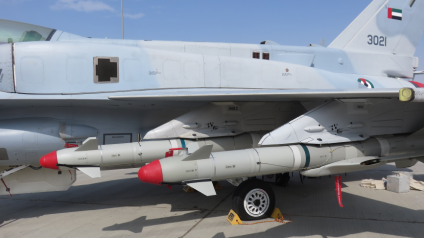
Al Tariq glide bomb by fitting a small turbojet engine, and likely disposing of the wing-kit. The glide-bomb variant of the
Al Tariq has a range in excess of 100km. Fitting it with a turbojet would more than double that range. The
Al Tariq is based on South Africa’s
Umbani glide-bomb kit.
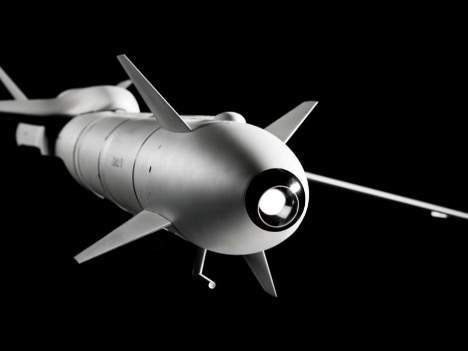
A mock-up of the engine installation was shown on the stand of the UAE’s new EDGE defence-industrial consortium at the Dubai Air Show, held on 17–21 November 2019. The configuration uses a flush rather than a scoop inlet, which is aerodynamically neater, if less efficient in propulsion terms.
The
Al Tariq family of weapons has featured prominently as one of the main capabilities used by the UAE Air Force (UAEAF) in taking part in the Saudi Arabian-led intervention in Yemen. Semi-active-laser and imaging-infrared seeker options are available. The weapon is integrated on the UAEAF’s Lockheed Martin F-16 Block 60
Fighting Falcon aircraft. Introducing a powered variant would provide the aircraft with an improved stand-off capability, given the extended range of the weapon in comparison to the unpowered version. As well as enhancing the air force’s strike potential, this development should also further the UAE’s ambition to develop its guided-weapons sector as part of a broader initiative to grow its defence-industrial base and reduce reliance on foreign acquisition.
Turbojet-engine developments currently pursued by both Iran and the United Arab Emirates should give each country improved stand-off capabilities, Douglas Barrie writes.

www.iiss.org




 sldinfo.com